
Types of Gold Jewelry: What’s the Difference Between Solid Gold, Gold Filled, Vermeil & Gold Plated?
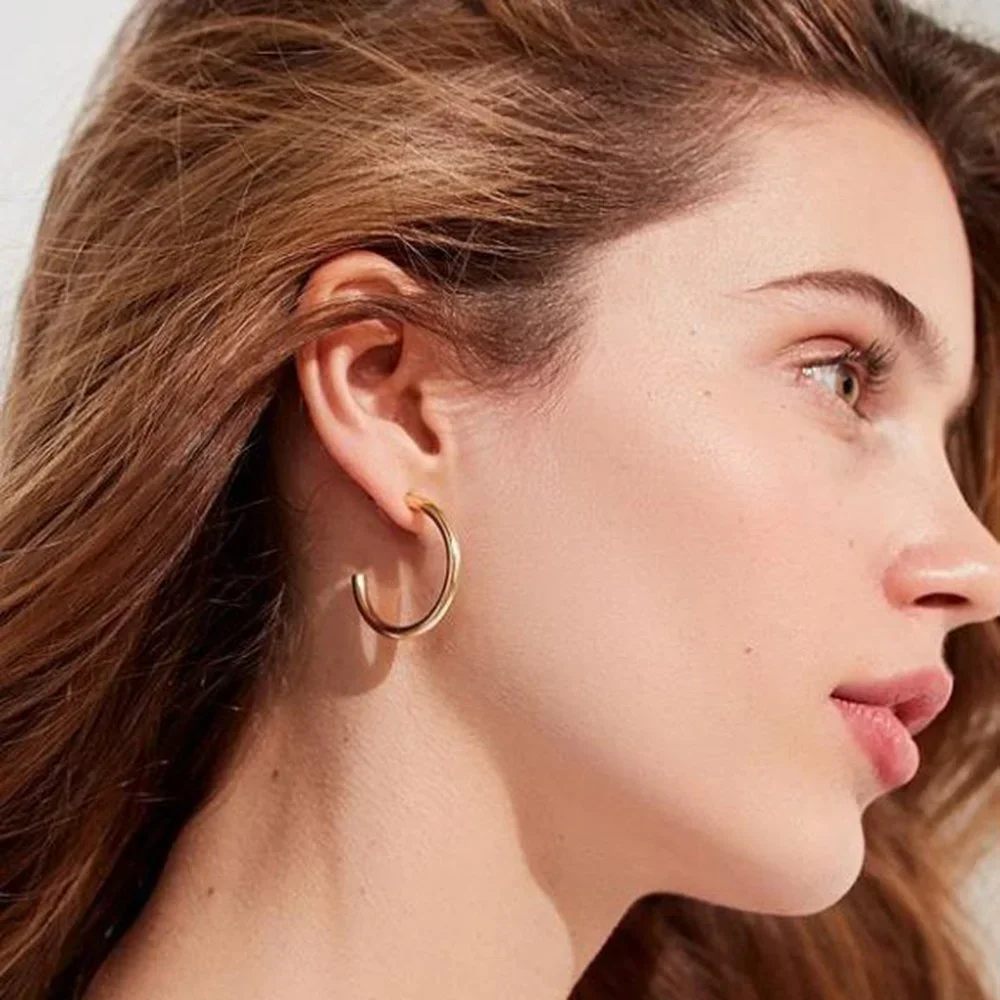
Classic Gold Hoop Earrings
Understanding Your Options Before You Buy
Gold jewelry is one of those purchases that feels simple until you start shopping and then suddenly you're staring at terms like "vermeil," "14k," and "gold-filled," wondering what actually separates a $40 pair of earrings from a $400 pair. Whether you're building a everyday jewelry box, buying a gift, or investing in a piece you'll pass down, understanding the different types of gold jewelry helps you spend your money with confidence.
Here's a breakdown of what's actually out there, and how to choose what's right for you.
First, Let's Talk Karats
"Karat" (not to be confused with carat, which measures gemstone weight) tells you how much pure gold is in a piece. Pure gold is soft, so it's mixed with other metals like copper, silver, or zinc; to make it durable enough for everyday wear.
24k gold: 100% pure gold. Very soft, deep yellow color, rarely used in everyday jewelry because it dents and scratches easily.
22k gold: About 91.7% pure gold. Common in South Asian and Middle Eastern jewelry traditions, where rich color is prized.
18k gold: 75% pure gold. A popular middle ground with strong color and good durability. Common in fine jewelry and engagement rings.
14k gold: About 58.3% pure gold. The most popular choice in the U.S. for everyday jewelry. Durable, more affordable, and still has good gold color.
10k gold: About 41.7% pure gold. The most durable and budget-friendly option that can still legally be called "gold" in the U.S., though the color is noticeably paler.
A simple rule of thumb: the higher the karat, the richer the color and the higher the price, but also the softer the metal. If you live in your jewelry (gym, dishes, typing all day), 18k, 14k or even 10k may serve you better long-term than 22k or 24k.
The Different Types of Gold Jewelry
1. Solid Gold
This is jewelry made entirely of a gold alloy all the way through (10k–24k, as described above). It's the most durable option; it won't flake, peel, or fade and it's typically hypoallergenic-friendly at higher karats, since there's more real gold and less base metal. Solid gold is the best choice if you want a piece to genuinely last a lifetime, but it comes at the highest price point.
Best for: Investment pieces, engagement rings, jewelry you'll wear daily for years, sensitive skin.
2. Gold Vermeil (pronounced "ver-may")
Vermeil is real sterling silver coated with a thick layer of gold (U.S. standards require at least 2.5 microns of gold, which is significantly thicker than standard plating). Because the base metal is silver rather than cheap alloy, vermeil has a nicer weight and feel than plated jewelry, and it tends to hold its color longer.
Best for: Shoppers who want a "fine jewelry" look and feel at a mid-range price, gifting, trend pieces you'll wear often but don't need to last 20 years.
3. Gold-Filled Jewelry
Gold-filled jewelry has a layer of real gold mechanically bonded to a base metal (usually brass). The layer is much thicker than plating (legally required to be at least 1/20th of the item's total weight). This makes it far more tarnish- and wear-resistant than plated jewelry, and it can last for years, even decades, with proper care.
Best for: Everyday wear on a budget, layered necklaces and stacked rings you don't want to babysit, water/shower-safe pieces (with reasonable care).
4. Gold-Plated Jewelry
Plated jewelry has a thin layer of gold applied over a base metal, usually through electroplating. It's the most affordable way to get the gold look, but that thin layer will wear off over time, especially with exposure to water, lotion, and friction.
Best for: Trendy, low-cost pieces you don't expect to wear forever, statement jewelry for special occasions, testing out a style before investing in solid gold.
5. PVD Gold Jewelry
PVD stands for Physical Vapor Deposition: a coating process where gold is vaporized in a vacuum chamber and bonded to a base metal (often stainless steel or titanium) at a molecular level. This creates a coating that's noticeably harder and more scratch, tarnish, and water-resistant than traditional electroplating, which is why you'll increasingly see it marketed as "waterproof gold jewelry."
It's become popular in the last several years, especially for pieces meant to be worn 24/7. Think shower, gym, and swimming included since the base metal (usually stainless steel) is already corrosion-resistant on its own, and the PVD layer holds up better to daily friction than gold plating does.
A few things to know: PVD is a coating technique, not a purity standard, so the actual gold content and color can vary by brand.
Best for: Everyday-wear jewelry you don't want to take off (gym, shower, pool), minimalist stacking pieces, budget-conscious shoppers who still want strong scratch and tarnish resistance.
6. Yellow, White, and Rose Gold — Same Gold, Different Color
This trips a lot of people up: yellow, white, and rose gold aren't different purities, they're the same gold alloyed with different metals to change the color.
Yellow gold is closest to gold's natural color, mixed with copper and silver.
White gold is mixed with metals like palladium or nickel, then usually coated in rhodium for a bright white shine (which means it may need re-plating every year or two as the rhodium wears down).
Rose gold gets its blush tone from a higher copper content, and tends to be a bit more durable because copper is a hard metal.
Choosing between them is really a style decision, not a quality one. Think about your skin tone, your existing jewelry, and what you're drawn to visually.
How to Choose What's Right for You
Buying an heirloom or engagement piece? Go solid gold, 14k or 18k, for longevity.
Building a stack of everyday rings or a layered necklace collection? Gold-filled or vermeil gives you durability without the solid-gold price tag.
Want to try a trend or buy a gift under $50? Gold-plated is a smart, low-risk option; just know it needs gentler care.
Want something you never have to take off? PVD gold jewelry is built for exactly thatshower, gym, and pool included.
Have sensitive skin? Look for higher karat solid gold or vermeil over nickel-heavy plated pieces.
Caring for Your Gold Jewelry
Regardless of type, gold jewelry lasts longer when you:
Put it on after applying lotion, perfume, and hairspray
Remove it before swimming, showering, or working out
Store pieces separately (in a soft pouch or lined box) so they don't scratch each other
Clean gently with a soft cloth and mild soap and water